
1win Plinko: How the Ball-Drop Game Really Works
1win Plinko isn’t a slot, even though it sits in the same casino lobby. There are no reels, no paylines, no symbols to line up. You set a bet, drop a ball, and watch it bounce through a pyramid of pegs until it lands in a multiplier slot at the bottom. That’s the whole loop, repeated as many times as you want.
This page covers how the mechanics actually work, how to get from a new account to your first drop, what deposits and demo mode look like, and how Plinko behaves in the 1win app. It also looks, honestly, at whether there’s any strategy involved beyond picking settings you’re comfortable with.
Key takeaways
- A dropped ball bounces through pegs into a multiplier slot; no reels or paylines involved.
- Lines (roughly 8-16) and volatility change how many slots exist and how spread out they are, not the odds.
- Demo mode uses a virtual balance to test settings risk-free.
- Plinko plays the same in the 1win Android, iOS and Windows apps as on desktop.
- Outcomes are RNG-based; no setting or betting pattern changes the long-run house edge.
- 1win operates under a Curaçao license; Plinko is for players 18 and over.
What Is 1win Plinko?
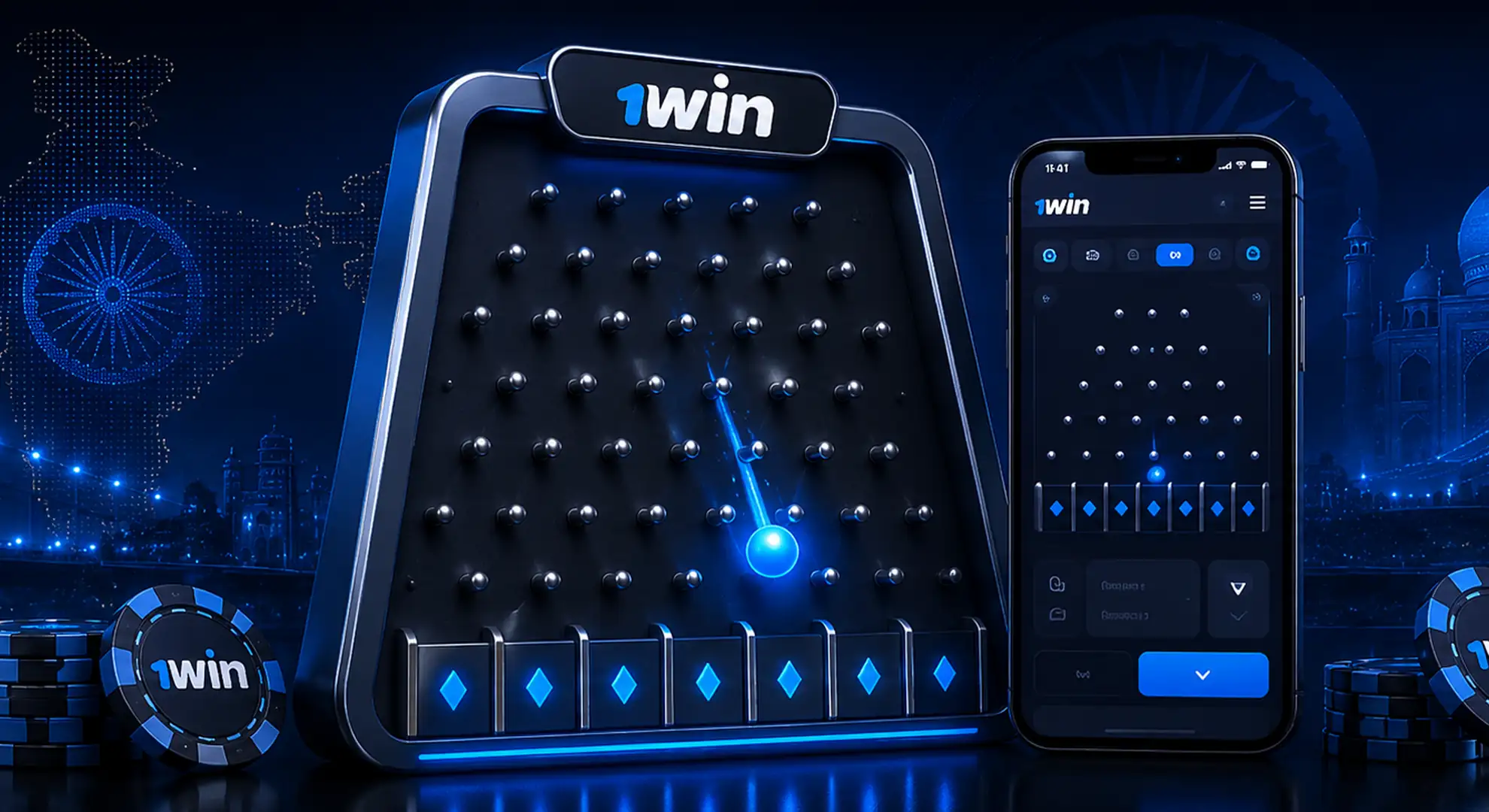
1win Plinko is a ball-drop instant game: no reels, no paylines. You set a bet and watch a ball fall through a pyramid of pegs into a multiplier slot at the bottom. There’s no bonus round to trigger and no paytable of symbol combinations to memorize the way a slot machine would require.
Picture a triangle made of pegs, wide at the bottom and narrowing toward a single drop point at the top. You choose a bet size and release the ball; the game’s random number generator decides the bounce path, not gravity. The ball zig-zags down the board until it lands in a slot at the bottom, and whatever it lands on is what your stake gets multiplied by.
Compare that to a slot, where the outcome depends on which symbols line up on a payline. Plinko skips all of that: one drop, one bounce path, one result. It’s closer in spirit to a physical coin-drop arcade machine than to a video slot, even though it runs on the same RNG-driven logic as any other instant game on the platform.
That simplicity is also the trap, if you go in expecting the pegs themselves to be “beatable.” They’re a visual layer over a math model, not a physics simulation you can read patterns into. The next section covers what actually determines the multiplier slots you’re dropping into.
How Lines and Volatility Shape the Multipliers
Lines (roughly 8 to 16) set how many multiplier slots exist, and volatility sets how spread out those multipliers are. Higher volatility means rarer but larger multipliers, while lower volatility spreads wins more evenly across smaller, more frequent payouts.
Two settings sit above the board before you drop a ball: lines and volatility (sometimes labeled “risk”). Lines control the width of the pyramid; fewer rows means fewer pegs and fewer slots at the bottom, while a higher line count widens the board. More slots doesn’t automatically mean better odds, just a finer-grained spread of possible outcomes.
Volatility is the setting that actually shapes how dramatic those outcomes feel. In broad terms:
- Low volatility: multipliers cluster closer together, wins are frequent, the top slot modest.
- Medium volatility: a wider gap between low and high slots, big hits less frequent than low, more than high.
- High volatility: most slots pay small or nothing, but the rare top slot carries a much larger multiplier.
One low-volatility configuration on 1win’s Plinko board, for example, has produced ranges as narrow as roughly x0.5 to x5.6. The exact figures shown in the game client can change with lines and volatility, so treat the in-game paytable, not any fixed number quoted online, as the source of truth. What doesn’t change is the underlying idea: dial volatility up and you’re trading frequency for size, not improving your odds overall.
How to Start Playing Plinko at 1win
Register with 1win, fund your account, open Plinko from the game library, set your bet, lines and volatility, then drop the ball. The whole path from a new account to a first drop is six short steps:
Create an account. Sign up with an email, phone number, or a social login, and add a promo code if you have one. Full field-by-field detail is on the registration page; the short version is that it takes a couple of minutes.
Verify and fund your profile. Add your preferred deposit method and top up your balance (more on methods below).
Open Plinko from the games library. Search «Plinko» or find it under instant games/originals; it loads directly in the browser or app.
Set your bet size. Start small while you’re still getting a feel for how the board behaves.
Choose lines and volatility. These are the two dials covered above; pick a combination and you’ll see the slot layout update on the board before you commit.
Drop the ball. Confirm the bet and watch the round play out; the balance updates automatically once the ball lands.
1win operates under a Curacao gaming license. No dedicated Indian regulator oversees offshore platforms like this one, so check your own state’s rules on real-money gaming before you deposit and play. If any of that feels like a lot to commit real money to on the first try, that’s exactly what demo mode below is for.
Deposits: Funding Your Account for Real-Money Plinko
1win accepts cards, e-wallets and crypto for deposits. That gives Indian players a few different paths to fund a Plinko session, depending on which method they already use for other online spending. The full method list and current limits live on the dedicated payment methods page rather than repeated here.
| Method family | What to know |
| Cards (Visa/Mastercard) | Standard option, near-instant crediting for most users |
| E-wallets (Piastrix, FK Wallet, Perfect Money, MoneyGo) | Faster for players who already hold a wallet balance |
| Crypto | Useful where card processing is inconsistent; conversion happens at deposit |
Minimums and processing windows shift between methods and change over time, so this page won’t repeat a fixed rupee figure that might already be stale by the time you read it. Current numbers live on the dedicated payment methods page; check there before your first deposit.
Demo Mode: Testing Settings Without Risking Money
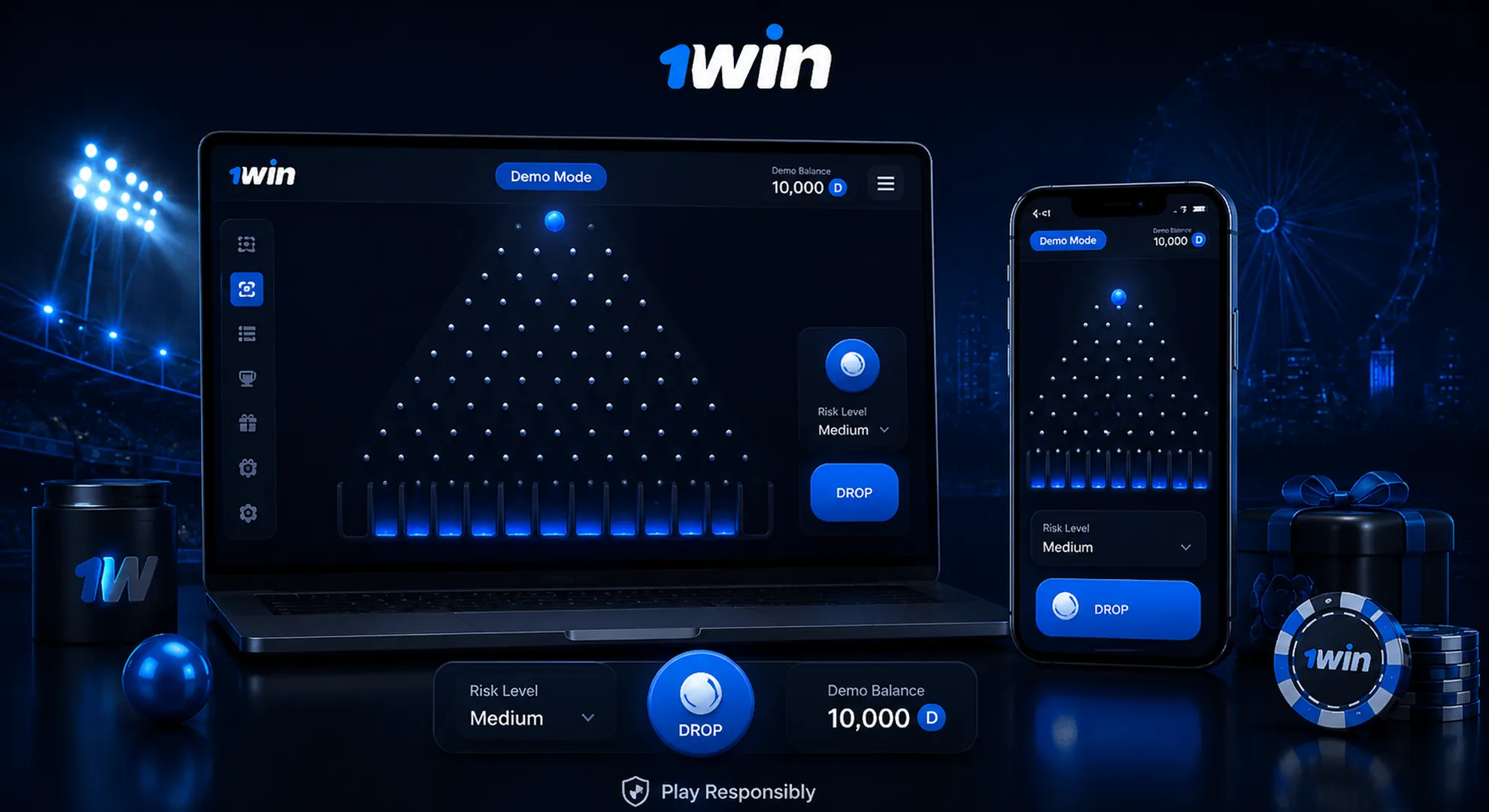
Demo mode runs on a virtual balance, so you can try different lines and volatility combinations before depositing a rupee. Wins in demo mode can’t be withdrawn and losses don’t touch your real balance either, which makes it the natural place to get a feel for a configuration first.
Open Plinko from the game library and there’s usually a demo or “fun mode” toggle before you’re asked to bet real money. Switch it on and you’re playing with a virtual balance that resets on its own. It’s play money, plain and simple.
Where demo mode actually earns its place on this page is as a testing ground for the lines and volatility settings covered earlier. Rather than guessing what “high volatility, 16 lines” feels like with real stakes attached, you can run a few dozen drops in demo. Watch how often the ball lands in a paying slot versus the edges, and compare against a low-volatility batch. That’s a more useful way to spend ten minutes in demo mode than clicking through it to get to the real-money button, and it costs nothing.

Playing Plinko in the 1win Mobile App
Plinko runs in the 1win Android, iOS and Windows apps, downloaded directly from the official site rather than an app store. The board behaves identically to the desktop version: same lines and volatility controls, same bet sizing, just resized for a phone screen.
Since 1win’s apps aren’t distributed through Google Play or the Apple App Store, the install file comes from the official 1win site itself. Full step-by-step install instructions for each OS are covered on the app page rather than repeated here.
You may come across offers tied to installing the app, including a commonly cited figure around Rs 10,000. Treat any specific number like that as promotional and time-limited rather than a standing guarantee. Install bonuses tend to rotate with terms attached, such as wagering requirements and expiry windows, and a figure quoted on a third-party page can easily be out of date. The reliable move is to check the in-app offers screen after logging in for what’s actually live that day.
Is There a Winning Strategy, or Is It All RNG?
Plinko results come from a random number generator, so no line or volatility combination changes the game’s long-run house edge, and no betting pattern shifts the odds either. Every drop is an independent event decided the moment you confirm the bet.
The bouncing-ball animation is a visual layer on top of that RNG outcome, not a physical process you can read. Plinko’s visible pegs make it look more “physical” than a slot reel, though, which invites people to hunt for patterns that aren’t there.
Players do talk about “strategy” around Plinko, and there is something real underneath that word, it just isn’t an edge. Choosing fewer lines and lower volatility changes how often you see a payout and how big the swings feel; more lines and higher volatility do the opposite. That’s a bankroll and variance choice, not a way to shift the odds in your favor. Betting patterns, doubling up after a loss, chasing a specific slot, don’t change what the RNG does on the next drop. Each drop is memoryless, so the board has no obligation to balance out after a run of small or zero-multiplier results.
A genuinely useful habit, rather than a system: decide your bet size and a stop point before you start, and pick the volatility that matches how much swing you’re comfortable watching. Treat demo mode above as the place to get a feel for a configuration before real money is involved.
Licensing and Playing Responsibly
1win operates under a Curaçao gaming license, the license class most offshore-facing igaming brands serving Indian players operate under. Plinko, like all games on the platform, is for players 18 and over who set a budget and time limit before playing.
Full detail on the license, the regulator, and what it does and doesn’t cover lives on the license page, worth a look if you want the specifics rather than a summary here.
Plinko, like every other game on the platform, is for players 18 and over. Set a budget and a time limit before you start. Treat any figure you drop into the game as money you’re comfortable not seeing again — with an RNG-based game like this one, that’s always the honest way to think about it.
If play stops feeling like entertainment — if you’re chasing losses, or spending more time or money than you planned — use the deposit-limit and self-exclusion tools in your account settings. The same goes if you’re finding it hard to stop; you can also reach out to a support service in your region.
FAQ
Is 1win Plinko rigged?
No more than any other RNG-based instant game; outcomes come from a random number generator, not a fixed script.
What’s the minimum bet on Plinko at 1win?
Minimum and maximum bet sizes are set inside the game itself and can vary, so check the bet slider in the live game rather than relying on a number quoted elsewhere.
Can I play Plinko for free before betting real money?
Yes. Demo mode gives you a virtual balance to try different lines and volatility settings with no deposit required and no withdrawal of demo winnings.
Does the number of lines change my odds of winning?
It changes how many multiplier slots exist and how the outcomes are spread, not the underlying house edge; it’s a variance choice, not an odds improvement.
Is the Rs 10,000 app-install bonus still active?
Install-linked offers change often and carry their own terms, so treat any specific figure as promotional and time-limited. Check the in-app offers screen for what’s actually live.
Do I need to download anything to play Plinko?
No. Plinko loads in-browser from the game library. The app is an option for a more native mobile experience, not a requirement to play.
Updated:
Tested by the editorial team